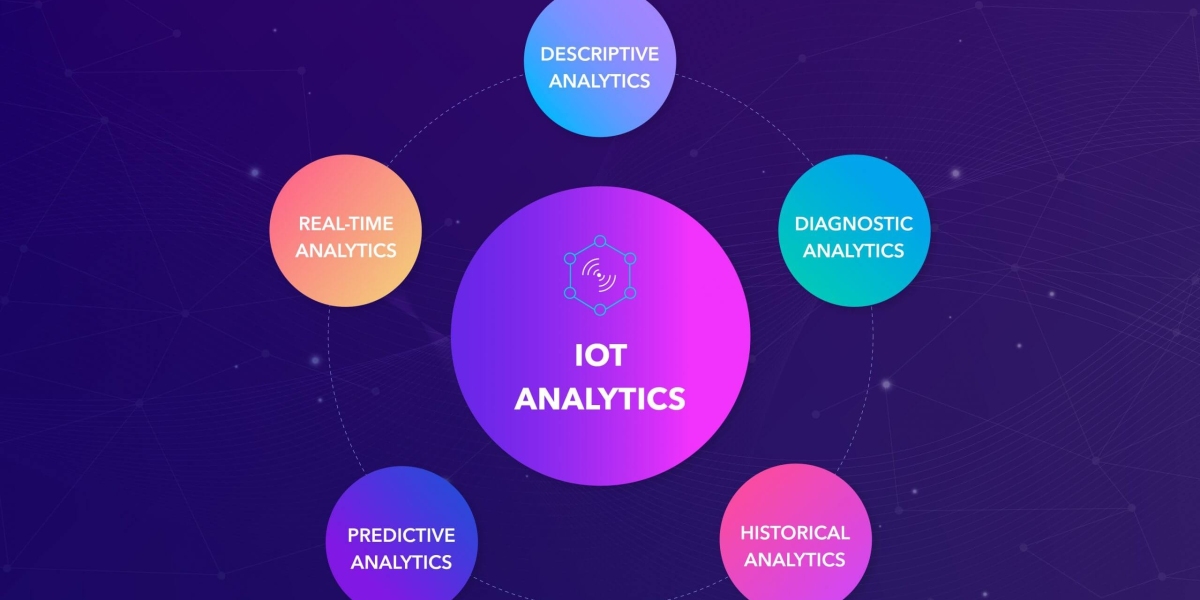

While the current IoT analytics market is heavily focused on optimizing existing processes like manufacturing and logistics, the most exciting IoT Analytics Market Opportunities lie in creating entirely new business models and services that were previously unimaginable. One of the most profound of these opportunities is the shift from selling products to selling outcomes, often referred to as "Product-as-a-Service." In this model, a manufacturer doesn't just sell a piece of equipment, like a jet engine or an industrial air compressor; they sell a guaranteed outcome, such as a certain number of hours of uptime or a specific volume of compressed air. This business model is only made possible by sophisticated IoT analytics. By continuously monitoring the equipment's performance and using predictive analytics to anticipate maintenance needs, the manufacturer can proactively service the equipment to ensure it meets the guaranteed uptime, transforming a one-time capital sale into a long-term, recurring service revenue stream.
A second, massive opportunity lies in the creation of high-fidelity "Digital Twins." A digital twin is a living, virtual representation of a physical asset, process, or even an entire system, like a factory or a city. This virtual model is continuously updated with real-time data from the IoT sensors on its physical counterpart. The opportunity for IoT analytics is to use this digital twin as a risk-free environment for simulation and optimization. For example, an engineer could use the digital twin of a wind turbine to simulate the impact of different weather conditions on its performance or to test a new control algorithm without ever touching the physical turbine. A city planner could use the digital twin of a city's traffic system to model the impact of a new road closure or public event. This ability to model, simulate, and optimize complex systems in the virtual world before implementing changes in the real world is a transformative opportunity that drives efficiency and de-risks innovation.
The rise of edge computing is opening up a completely new frontier of opportunity for IoT analytics, known as "edge analytics." In many IoT applications, sending all the raw sensor data back to a centralized cloud for analysis is too slow, too expensive, or simply impractical. Edge analytics involves deploying analytics and AI models directly on or near the IoT devices themselves, for example, on an IoT gateway or an edge server. This allows for real-time decision-making with extremely low latency. This is a critical opportunity for use cases like autonomous vehicles, which need to make split-second decisions based on sensor data, or in a factory, where a smart camera can perform real-time quality control on a production line and immediately flag a defective part. The opportunity for vendors is to create a new class of lightweight, efficient analytics platforms and tools specifically designed for these resource-constrained edge environments.
Finally, there is a significant and largely untapped opportunity in aggregating and monetizing anonymized IoT data to create new data products. A single company's IoT data is valuable, but the aggregated data from thousands of companies in the same industry can be even more so. For example, a company that provides IoT solutions for the agricultural sector could aggregate anonymized data on soil conditions, weather, and crop yields from all of its customers to create highly accurate regional crop forecasts, which it could then sell to commodity traders or insurance companies. Similarly, a provider of connected car technology could aggregate traffic pattern data from thousands of vehicles to provide real-time traffic analysis services to city planners. This opportunity to become a data broker, creating new, high-margin revenue streams from the collective intelligence of a large IoT network, represents a powerful new dimension for the future of the IoT analytics market.
✎ Explore More Like This in Our Regional Reports:
South Korea 5G Mm Wave Technology Market