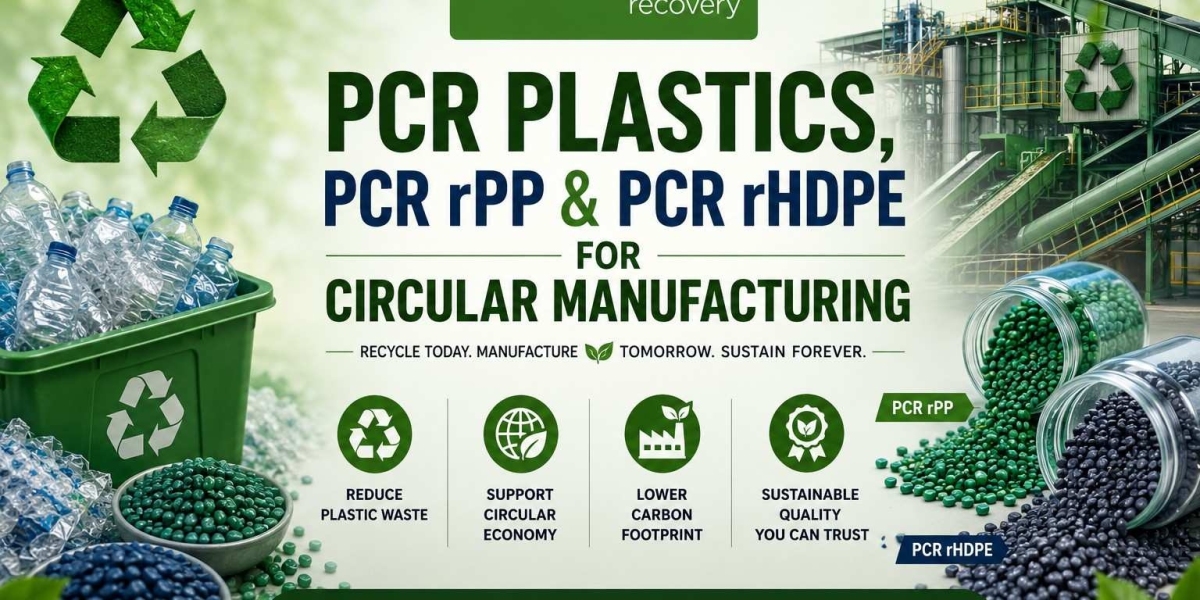

Introduction: The Plastic Problem Has a Smarter Solution
Each year, more than 400 million tonnes of polymer are made globally but less than 10% is recycled (UNEP 2024). This gap is costing companies money, image and approval from regulators.
Derived from PCR Plastics (short for Post-Consumer recycled plastics. They are closing the gap. In particular, PCR rPP (recycled polypropylene) and PCR rHDPE (recycled high density polyethylene) are the core of circular manufacturing programs in the automotive, packaging and consumer industries.
No matter if you're a procuring manager or sustainability leader or product designer this guide will explain the nature of these materials and how they work and the reason why you should switch right now.
What Are PCR Plastics?
PCR Plastics are made of the plastic waste that is discarded after use such as containers, bottles and packaging which has been cleaned, processed and remanufactured back into a new material. They differ in comparison to PIR (Post-Industrial Recycling) plastics that come from factory scraps, not the waste of consumers.
Key Types at a Glance
Material | Full Name | Common Source | Primary Use |
PCR rHDPE | Recycled High-Density Polyethylene | Shampoo bottles, milk jugs | Pipes bins, pipes Packaging, bins |
PCR rPP | Recycled Polypropylene | Food tubs Caps of bottles | Containers, automotive parts, |
The PCR rHDPE: Workhorse of Recycled Plastics
PCR rHDPE (Recycled HDPE plastic) is one of the most popular recycled materials used in commercial manufacturing, and with good reason.
HDPE is a plastic with an number 2 in the resin's code which makes it among the top gathered and sorted plastics used in municipal programs. After processing and recycled, HDPE plastic has around 85-90 percent of HDPE's original Tensile strength which makes it ideal for the most demanding structural needs.
Where PCR rHDPE Is Used
Outdoor furniture and decking
Chemical containers and industrial drums
Bags for grocery shopping and retail packaging
Pipes and drainage systems for agriculture
A real-world illustration: Unilever committed to having a PCR content of 25% throughout all plastic packaging by 2025. HDPE containers being the most-used product within their distribution chain.
The PCR rPP: The Lightweight Champion
PCR rPP (Recycled Polypropylene) has traditionally been more difficult in recycling because of the challenges of sorting However, advances in technology have allowed it to become more viable.
Polypropylene accounts for about 22 percent of the total production of plastic (Plastics Europe, 2023) However, only 1% of it has been recycled on a large scale up until recent. The situation is rapidly changing.
The latest optical sorting techniques and recycling are now able to produce PCR rPP grades that are compliant with the requirements for food contact in certain applications. This is an important technological breakthrough in this sector. FMCG sector.
PCR rPP Strengths
Lightweight and extremely resistant to fatigue
High tolerance to heat (up up to 130 degC)
Compatible with blow molding, as well as extrusion
Commercial recycling services are receiving increasing support. services around the world
PCR rPP vs. PCR rHDPE: Side-by-Side Comparison
Property | PCR rHDPE | PCR rPP |
Density | 0.93-0.97 g/cm3 | 0.89-0.91 g/cm3 |
Heat Resistance | ~120degC | ~130degC |
Chemical Resistance | Excellent | Good |
Recyclability (MRF Acceptance) | High | Moderate-High |
Cost Vs. Virgin | 15-30% cheaper | 10-25% cheaper |
Typical Color | Natural/Black | Natural/Grey |
Why Circular Manufacturing Needs PCR Materials
Circular production is an model of production in which waste products are transformed into raw inputs to the material. PCR Plastics are the real mechanism that shuts off the loop.
Three benefits of HTML0:
Reduces carbon emissions Utilizing the PCR technology, rHDPE reduces CO2 emissions by as much as 1.5 tons per ton of material, compared with HDPE made from virgin material (European Environment Agency 2022).
Stability of cost Materials like PCR protect against the fluctuating crude oil prices, which drive the cost of virgin plastic.
The HTML0 code is a requirement for regulatory compliance - The EU Packaging and Packaging Waste Regulation (PPWR) sets minimum PCR content requirements beginning in 2030. Early adopting a PCR allowing for competitive advantages.
How to source for PCR rPP and PCR RHDPE A Practical Guide
Step-by-Step Sourcing Process
Determine your performance specification Determine the tensile strength and MFI (melt flow index) and color specifications.
Commercial recycling services that vet commercially Search for providers that have been certified by ISCC PLUS, or GRS (Global Recycling Standard).
Ask for COA (Certificate of Analysis) -- Confirm the levels of contamination, ash content and odor ratings.
Test trial pilots -Test PCR blends at 20 percent, 50%, as well as 100% prior to the full-line switchover.
Annually audit The quality of your supply may vary from batch to batch; integrate testing protocols into your quality assurance system.
FAQ: PCR Plastics, PCR rPP & PCR rHDPE
Q1 What is PCR for in the world of plastics? PCR stands for Post-Consumer Recycled. It is a term used to describe plastic made from products that consumers use and throw away such as bottles and packaging that is taken, processed and then transformed into a new resins for the production of.
Q2: Is PCR rHDPE safe for food? Standard PCR rHDPE isn't approved for direct contact with food in the majority of markets. However chemicals recycled, or grades that have been decontaminatedthat are processed in accordance with EFSA or FDA protocols can be food-contact compliant in specific situations.
Q3: What's the difference between recycled plastic and PCR? All PCR plastic is recyclable, however not all recycled plastics are PCR. The PCR plastic is primarily made from the postconsumer trash streams. Recycling from post-industrial (PIR) plastic is derived from manufacturing wastes and is regarded as lower-grade in sustainability reports.
Q4 How does PCR RPP compare with virgin PP in terms of performance? PCR rPP typically has 80-90% of the mechanical properties of virgin PP. Modern stabilizers and compatibilizers are able to reduce that gap even more which makes PCR rPP suitable for a wide range of non-structural uses.
Q5 What are commercial recycling options to the plastics? Commercial recycling services collect to sort, process, and recycle the waste of consumer or industrial plastics into feedstocks that are recyclable. Companies such as Veolia, Renewlogy, and PureCycle Technologies specialize in PP and HDPE streams, and also supply PCR resin directly to producers.
Q6 Do PCR plastics can be mixed with virgin materials? Yes. Many companies use blends of PCR ranging from 20 to 50% to meet sustainability goals and the performance demands. Blending can also aid in managing the color consistency and processing behaviors on equipment that is already in use.
Q7. What certificates should I seek out in plastic manufacturers that use PCR? Look for ISCC PLUS or GRS (Global Recycled Standard) and the APR (Association of Plastic Recycling) recognition. They verify chain-of-custody as well as recycled claims- vital for sustainable reporting and regulatory conformity.
Key Takeaways
Plastics from PCR are recycled from post-consumer waste that allow for genuine circular manufacturing.
PCR HDPE can be described as the best widely-available and most efficient recycled plastic used for use in rigid-based applications.
PCR RPP is expanding its reach thanks to the advancements in sorting technology and is now a viable option for injection-molded components.
Both materials provide 10% to 30% savings in cost against virgin resin as well as significant carbon reduction advantages.
Purchasing from approved Commercial Recycling Services assures traceability, quality and conformity.
Pressure from regulators (EU PPWR, expanded producers' responsibility legislation) allows for the early PCR adoption an advantage in competitiveness and not only an CSR checkbox.
Conclusion: The Future Is Recycled
Brands that are switching to PCR rPP or PCR RHDPE aren't just cutting down on waste, they're also securing their supply chains to withstand increasing prices for virgin resin.
Circular manufacturing isn't just a trend. It's the direction that the entire industry is taking and PCR plastics form the primary material that makes it possible.
Are you ready to incorporate PCR-related materials to your production lines? Start by auditing your current resin expenditure, identifying the most high-volume areas where PCR replacement is feasible, then contact a commercially certified recycling company to request samples grades.
The circular economy isn't waiting around and so should your strategy for sourcing.
—------------------------------------------------------------------------------------------------------
Sources: UNEP Global Plastics Outlook 2024 | Plastics Europe Market Report 2023 | European Environment Agency | EFSA Food Contact Guidelines | ISCC PLUS Certification Standards