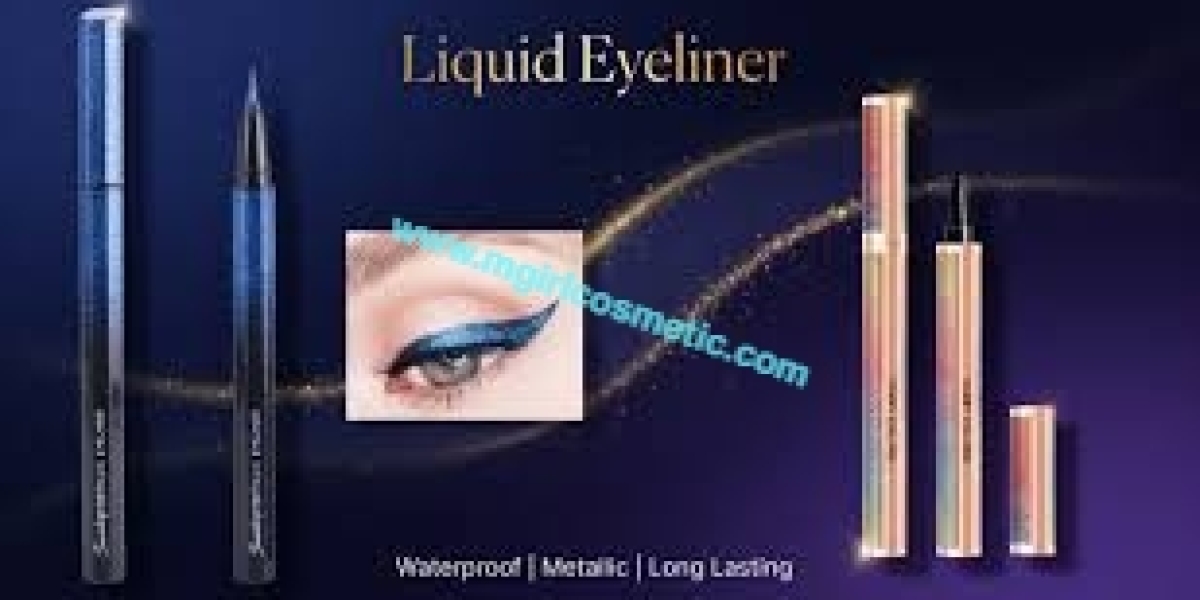

The 24-month stability testing requirement for a Liquid Eyeliner Factory represents a scientific commitment to consumer safety and product performance that extends far beyond regulatory compliance. Mgirlcosmetic, as a professional cosmetics manufacturer, recognizes that stability data provides the only reliable basis for assigning an expiration date to liquid eyeliner products. The fundamental question confronting any cosmetics brand is straightforward: what technical justification supports the shelf life claims printed on your packaging?
Stability testing for liquid eyeliners must address the unique vulnerabilities of these water-based or emulsion formulations. Liquid eyeliners contain pigments, film-forming agents, solvents, and preservatives that interact continuously over time-5. The 24-month testing window allows manufacturers to observe how these ingredients behave under controlled storage conditions at 25°C with 60% relative humidity, which simulates typical retail and consumer storage environments-4. This duration corresponds to the standard shelf life expectation for cosmetics, making it the minimum period required to substantiate any 24-month expiration date claim-8.
The testing protocol examines multiple critical parameters. Viscosity measurement, conducted using rotational viscometers at specified shear rates, detects thickening or thinning that would affect application precision-2. pH testing, with acceptable ranges typically between 4.0 and 8.5 for liquid eyeliners, indicates chemical stability and preservative efficacy-12. Color measurement using instrumental colorimeters identifies fading or shade shifts that would render the product unacceptable. Microbial testing at intervals throughout the 24-month period ensures preservative systems maintain their effectiveness-1. Each of these parameters must remain within predetermined specifications for the product to pass.
The 24-month duration is not arbitrary but derived from the rate of chemical degradation reactions. Accelerated stability testing at 40°C with 75% relative humidity provides predictive data after 6 months, but these results require confirmation through real-time testing-4. The relationship between accelerated and real-time data allows a Liquid Eyeliner Factory to launch products with a tentative shelf life while accumulating the 24-month real-time evidence that provides definitive validation-8. Without this confirmation, any shelf life claim remains an unsubstantiated assumption.
The consequences of inadequate stability testing manifest in predictable failure modes. Pigment settling, where solid particles separate from the liquid phase, causes uneven colour application and clogged applicators-5. The degradation of preservatives leads to microbial contamination that poses direct health risks to consumers using products around their eyes-8. Phase separation, where the emulsion breaks into distinct oil and water layers, creates an unusable product. Viscosity changes, such as thickening from solvent evaporation or thinning from polymer degradation, compromise the precision of application. Each of these failure modes emerges over time, often only becoming apparent after months of storage.
For eyeliner products, the stability challenge is compounded by the packaging system. Container closure integrity testing ensures that volatile components do not escape and contaminants do not enter-9. The interaction between the formula and packaging materials, including the wiper mechanism that regulates product pickup, must maintain performance through the intended shelf life-11. A formula stable in glass may fail in plastic packaging, making compatibility studies essential. These tests typically run concurrently with stability testing, sampling packages at specified intervals to verify that the packaging protects the product adequately.
Standardised testing methods provide comparable results across the industry. The GB/T 35889-2018 standard for liquid and gel eyeliner specifies that heat resistance testing should be conducted at 40°C for 24 hours, while cold resistance testing occurs at 5°C for 24 hours-12. Beyond these basic tests, comprehensive stability protocols recommended by cosmetics manufacturers include additional temperature and humidity conditions that reflect global market requirements. The ISO 14001-certified facilities like Mgirlcosmetic's implement these protocols as part of their quality management systems.
The economic implications of stability testing influence the choice of a Liquid Eyeliner Factory partner. Testing three representative batches through 24 months requires substantial investment in climate-controlled storage chambers, laboratory staff, and testing equipment-3. Factories with established stability programs demonstrate both financial stability and commitment to quality. The ability to provide stability reports, including MSDS, COA, and batch inspection documentation, distinguishes professional manufacturers from opportunistic producers who cannot substantiate their shelf life claims-1.
For brands seeking a reliable manufacturing partner, the availability of documented stability data provides concrete evidence of technical capability. Detailed product specifications, including stability reports and packaging compatibility studies, are accessible through comprehensive manufacturer resources such as https://www.mgirlcosmetic.com/product/. The 24-month stability study serves as both a technical requirement and a business commitment. Does your chosen manufacturing partner provide the documented evidence that justifies their shelf life claims?