
Advantages: Why ABC Cable Fits African Distribution Expansion Needs
ABC Cable provides several practical advantages that directly address common challenges faced by African power utilities.
1. Improved Safety in Dense and Challenging Environments
Traditional overhead lines using bare conductors can create risks in areas with trees, buildings or frequent human activity. The insulated construction of ABC Cable reduces the possibility of accidental contact and short circuits caused by external objects.
For example, in rapidly developing residential areas, utilities can install ABC Cable along narrow streets where conventional overhead lines may create safety concerns.
2. Faster and More Cost-Effective Installation
ABC Cable requires fewer supporting structures compared with traditional distribution systems. Its compact bundled design allows easier installation, reducing labor requirements and construction time.
For African regions where infrastructure development speed is critical, this advantage allows utilities to expand electricity access more efficiently.
3. Better Performance in Difficult Conditions
Many African regions experience harsh environments, including high temperatures, strong sunlight, dust and seasonal storms. ABC Cable uses durable insulation materials such as XLPE, which provide strong resistance against environmental stress.
This makes it suitable for long-term outdoor operation with reduced maintenance requirements.
Technical Specifications: Understanding ABC Cable Performance
ABC Cable is designed according to international electrical standards and can be customized according to different distribution requirements.
| Parameter | Typical Range |
|---|---|
| Conductor Material | Aluminum |
| Insulation Material | XLPE |
| Rated Voltage | 0.6/1 kV commonly used for low-voltage networks |
| Conductor Type | Stranded compact aluminum conductors |
| Installation Method | Aerial installation on poles |
| Temperature Resistance | Suitable for high-temperature outdoor environments |
| Standards | IEC and regional electrical requirements |
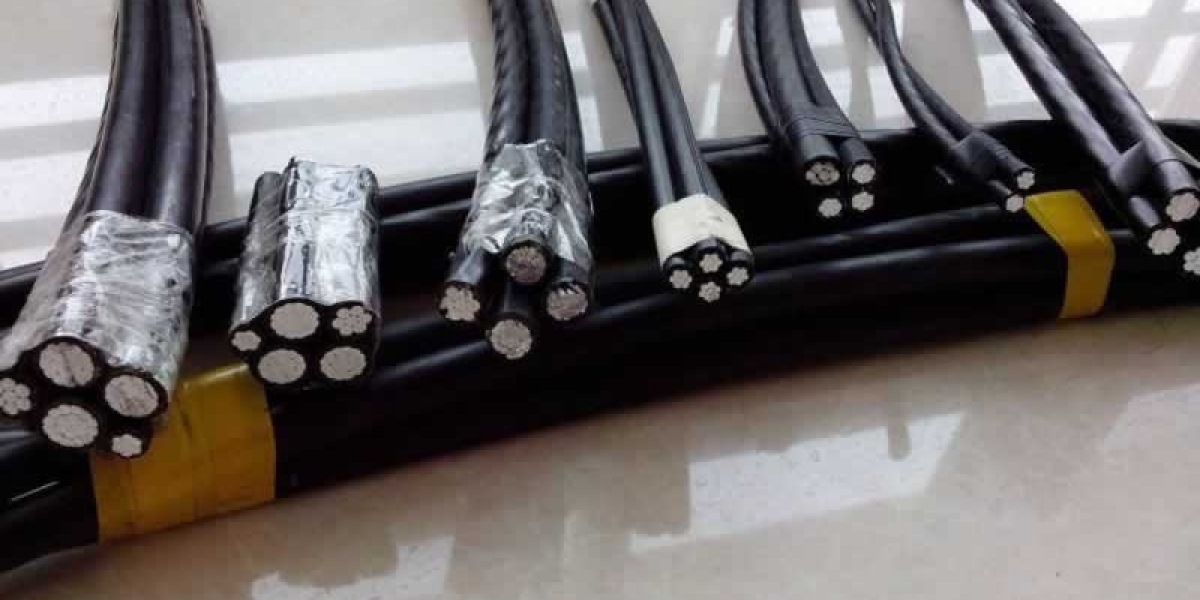
The main components of ABC Cable usually include:
- Phase conductors for power transmission
- Neutral messenger conductor for mechanical support
- Insulated protective layers
- Optional additional conductors for street lighting or communication applications
For utility engineers selecting cables, important factors include load capacity, voltage drop, environmental conditions and future expansion requirements.
Durability and Maintenance: Long-Term Reliability of ABC Cable
ABC Cable offers strong durability advantages compared with many traditional overhead solutions.
The XLPE insulation commonly used in ABC Cable provides resistance against:
- UV radiation from strong sunlight
- Moisture and humidity
- Temperature fluctuations
- Mechanical stress during installation
In African climates, where maintenance resources may be limited, reducing failure frequency is a major consideration. Proper installation using suitable accessories, including suspension clamps and connection fittings, can significantly extend the service life of the system.
Utilities should also conduct regular inspections focusing on:
- Cable sag and mechanical tension
- Connection points
- Pole conditions
- Signs of insulation damage
A well-designed ABC Cable network can provide reliable service for decades when properly installed and maintained.
Application Areas: Where ABC Cable Supports African Power Networks
ABC Cable is widely applied in different electricity distribution projects across Africa.
Rural Electrification Projects
Many rural areas require cost-effective solutions to connect villages and remote communities. ABC Cable helps utilities build low-voltage networks with fewer infrastructure requirements.
For example, a rural electrification project connecting scattered households can benefit from the simplified installation process and improved safety of ABC Cable systems.
Urban Residential Distribution
Rapid urban growth creates demand for reliable electricity connections. In crowded cities, ABC Cable reduces space requirements and minimizes risks associated with traditional overhead wiring.
Industrial and Commercial Power Supply
Factories, agricultural processing facilities and commercial buildings require stable power distribution. ABC Cable can provide reliable connections between distribution transformers and end users.
Renewable Energy Integration
As solar and distributed energy projects expand in Africa, ABC Cable can be used for connecting renewable power systems to local distribution networks.
FAQs About ABC Cable for African Power Utilities
1. Why are African utilities choosing ABC Cable instead of bare conductors?
African utilities choose ABC Cable because it improves safety, reduces installation complexity and performs better in challenging environments.
2. Is ABC Cable suitable for rural electrification?
Yes. ABC Cable is especially suitable for rural projects because it requires fewer supporting structures and allows faster network expansion.
3. How long can ABC Cable operate outdoors?
With proper installation and maintenance, ABC Cable systems can provide reliable operation for many years, depending on environmental conditions and usage requirements.
4. Can ABC Cable withstand Africa’s hot climate?
Yes. The XLPE insulation used in ABC Cable provides strong temperature resistance and protection against sunlight exposure.
5. Does ABC Cable reduce maintenance costs?
Generally, yes. Its insulated structure reduces failures caused by external contact, vegetation interference and weather-related issues.
6. What factors should engineers consider before selecting ABC Cable?
Engineers should evaluate current load demand, future expansion plans, voltage requirements, installation environment and applicable standards.
7. Can ABC Cable be used in urban and industrial projects?
Yes. ABC Cable is suitable for residential, commercial, industrial and public infrastructure distribution applications.
ABC Cable Supports Africa’s Future Power Expansion
As African countries continue investing in electricity infrastructure, choosing the right distribution technology becomes increasingly important. ABC Cable provides utilities with a practical solution that combines safety, reliability, installation efficiency and environmental durability.
For power distribution expansion projects, engineers and procurement teams should consider not only initial installation costs but also long-term operational performance. By selecting properly designed ABC Cable systems, utilities can build stronger networks and support wider access to dependable electricity across Africa.