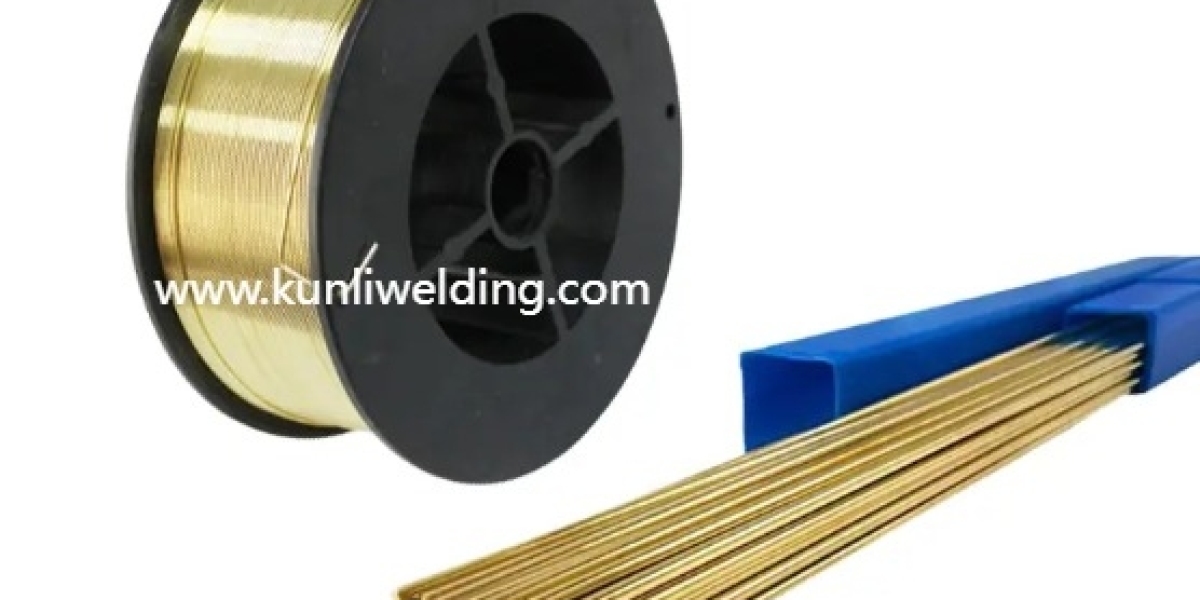

In the demanding world of marine fabrication and heavy industry, material selection defines the success of a project. Engineers and welders constantly seek solutions that offer longevity without sacrificing structural integrity. A primary solution in this field is the Aluminum Welding Wire ER5183 , a filler metal designed specifically to handle rigorous conditions. The ability of this alloy to withstand physical stress and environmental attack stems from its unique chemical composition, primarily its magnesium and manganese content.
The increased hardness observed in welds made with this wire is largely due to solid solution strengthening. When magnesium is added to the aluminum matrix, the atoms of the magnesium solute take the place of solvent aluminum atoms in the lattice structure. Because magnesium atoms differ in size from aluminum atoms, they create strain fields within the lattice. These strain fields interact with dislocations, which are defects in the crystal structure that allow metal to deform. By impeding the movement of these dislocations, the magnesium effectively locks the structure in place, requiring much more force to deform the metal. This results in a weld deposit that is significantly harder and stronger than pure aluminum or alloys with lower magnesium content.
Manganese also plays a contributing role in this durability. While present in smaller quantities than magnesium, manganese helps refine the grain structure of the weld metal. A finer grain structure creates more boundaries that arrest dislocation movement, further enhancing toughness. This combination ensures that the joint does not merely resist indentation but also maintains high tensile strength, a necessary trait for pressure vessels and structural components subjected to dynamic loads.
Corrosion resistance is equally vital, particularly for applications involving seawater or brackish environments. The Aluminum Welding Wire ER5183 excels here because magnesium is chemically active but forms a stable, protective film when alloyed with aluminum. Upon exposure to oxygen, aluminum naturally forms a thin oxide layer. The addition of magnesium strengthens this passive layer, making it more robust against the penetrating effects of chloride ions found in salt water. Unlike ferrous metals that crumble as rust, this alloy forms a barrier that halts further degradation, preserving the core metal beneath.
This resistance is crucial for the longevity of ship hulls, offshore platforms, and cryogenic tanks. In these settings, maintenance is difficult and costly. Using a filler metal that matches or exceeds the corrosion resistance of the base plate ensures that the weld seam does not become the weak link. Preferential corrosion, where the weld area dissolves faster than the surrounding metal, is significantly reduced when the chemical potential of the filler matches the base alloy.
The process of work hardening also contributes to the final properties of the assembly. As the structure undergoes stress or mechanical forming, the alloy has the capacity to increase in strength. This characteristic is particularly beneficial in shipbuilding, where hulls are subjected to constant cyclic loading from waves. The material absorbs energy effectively without failing, maintaining its hardness over time.
Selecting the right consumable involves understanding these metallurgical principles. It is about choosing a balance of elements that provides both the mechanical muscle to carry loads and the chemical shield to survive the environment. This specific alloy wire offers that balance, making it a standard choice for critical applications where failure is not an option. For professional specifications and detailed product options, please visit https://kunliwelding.psce.pw/8p6qdv .