
The global olive oil industry continues to face growing pressure to improve production efficiency, maintain product quality, and maximize profitability. As market competition intensifies and consumers demand higher-quality extra virgin olive oil (EVOO), producers can no longer rely solely on traditional laboratory testing methods to guide critical production decisions.
Conventional analytical techniques such as solvent extraction, chemical titration, and laboratory moisture testing often require hours—or even days—to generate results. During this time, olive quality can change significantly, and valuable processing opportunities may be lost.
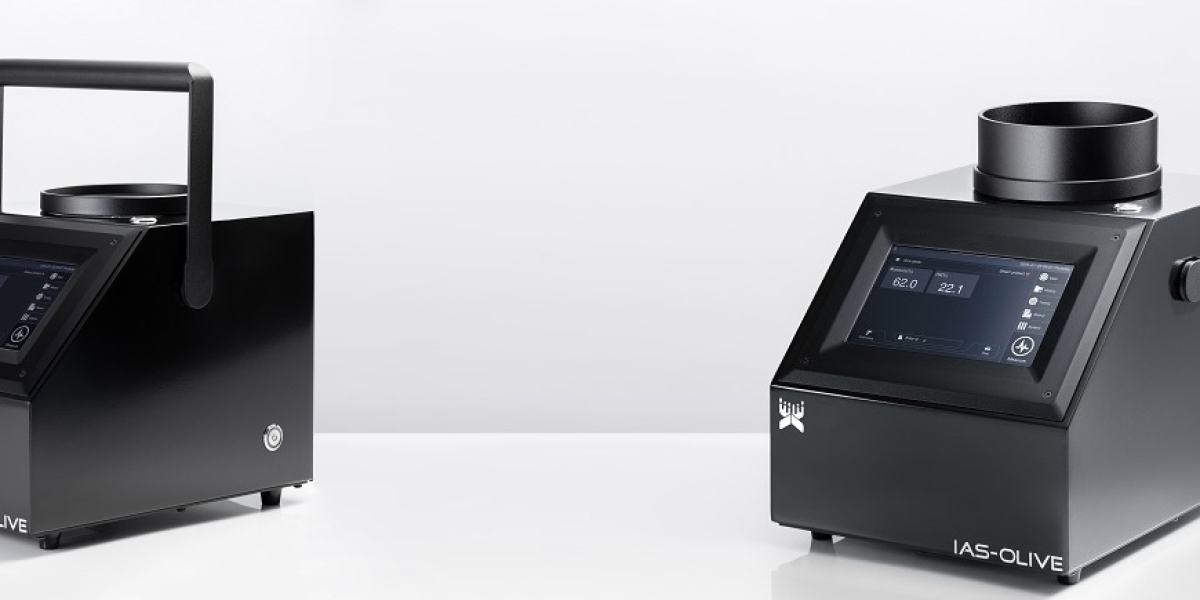
To address these challenges, many producers are turning to portable near-infrared (NIR) technology. The IAS-OLIVE Portable NIR Analyzer provides a faster and more practical approach, allowing users to evaluate whole olives and olive pomace directly in the field or at the processing facility within seconds.
Why Real-Time Olive Analysis Matters
The quality and value of olive oil are closely linked to the condition of the fruit at harvest and throughout processing.
As olives mature, their internal composition changes continuously. Oil content, moisture levels, and acidity can vary significantly depending on cultivar, climate, harvest timing, and storage conditions.
Making decisions based on outdated laboratory data can lead to:
- Reduced extraction efficiency
- Lower oil yields
- Increased processing costs
- Quality inconsistencies
- Reduced profitability
Real-time analysis enables producers to make faster and more informed decisions throughout the olive value chain.
Improving Harvest Timing Through Whole Olive Analysis
One of the most important factors in olive oil production is determining the optimal harvest window.
Harvesting too early may reduce oil yield, while harvesting too late can negatively affect oil quality and storage stability.
The IAS-OLIVE Portable NIR Analyzer helps producers evaluate key parameters directly from whole olives without destroying the sample.
Rapid Moisture Content Measurement
Moisture content has a direct impact on milling performance.
High moisture levels can contribute to:
- Emulsion formation during malaxation
- Reduced oil separation efficiency
- Increased processing challenges
Low moisture levels may also affect extraction performance and equipment operation.
By obtaining moisture measurements within seconds, producers can adjust processing parameters more effectively and improve overall extraction efficiency.
Fast Oil Content Evaluation
Oil content remains one of the most important indicators of harvest readiness.
With portable NIR analysis, growers and mill operators can quickly assess total oil content and identify fruit lots with the highest production potential.
This information helps optimize:
- Harvest scheduling
- Fruit segregation
- Milling priorities
- Production planning
Instead of relying on assumptions, operators can make decisions based on measurable data.
Monitoring Acidity Before Processing
Free Fatty Acid (FFA) content is one of the key quality indicators used to classify olive oil.
For extra virgin olive oil, acidity levels must remain within strict limits.
Traditionally, measuring acidity requires multiple laboratory steps, including oil extraction and chemical analysis.
The IAS-OLIVE system offers a faster alternative by analyzing spectral information associated with chemical changes occurring within the fruit.
This allows producers to identify potentially problematic batches before they enter the production line.
Early detection can help prevent:
- Quality downgrades
- Product blending issues
- Processing inefficiencies
- Loss of premium-grade oil production
For high-value EVOO production, this capability can provide significant economic benefits.
Reducing Oil Losses Through Olive Pomace Monitoring
Even after primary extraction, valuable oil may remain trapped within olive pomace.
For many mills, monitoring residual oil content remains a challenge because laboratory testing often cannot keep pace with production.
As a result, processing equipment may operate for extended periods without accurate feedback.
Real-Time Pomace Analysis
The IAS-OLIVE Portable NIR Analyzer allows operators to evaluate olive pomace directly at the production line.
By monitoring residual oil levels in real time, operators can quickly identify when extraction efficiency begins to decline.
This enables immediate adjustments to:
- Decanter settings
- Processing parameters
- Feed rates
- Malaxation conditions
Small improvements in extraction efficiency can generate significant gains when processing large production volumes.
Creating Greater Transparency in Olive Trading
Quality assessment is not only important for producers.
Olive buyers, cooperatives, and processing facilities also require reliable information when purchasing raw materials.
Traditionally, transactions may rely heavily on:
- Visual inspection
- Fruit appearance
- Historical relationships
- Estimated quality levels
However, these methods may not accurately reflect actual oil production potential.
Data-Driven Purchasing Decisions
Portable NIR technology introduces greater objectivity into the purchasing process.
Buyers can quickly evaluate:
- Oil content
- Moisture content
- Overall fruit quality
This helps ensure fair pricing based on measurable characteristics rather than assumptions.
Improved Supplier Accountability
When quality data becomes available at the point of delivery, growers are encouraged to optimize harvesting, handling, and transportation practices.
Over time, this can contribute to higher-quality raw materials across the entire supply chain.
Built for Real Production Environments
Agricultural processing facilities are challenging environments.
Equipment must operate reliably despite:
- Dust exposure
- Humidity
- Temperature fluctuations
- Continuous daily use
The IAS-OLIVE Portable NIR Analyzer is designed specifically for these conditions, combining portability with robust analytical performance.
Advanced Calibration Models
The accuracy of any NIR system depends heavily on its calibration database.
IAS has developed calibration models capable of accounting for:
- Different olive varieties
- Regional growing conditions
- Seasonal variations
- Moisture fluctuations
This helps ensure reliable predictions across diverse production environments.
User-Friendly Operation
Unlike traditional laboratory instruments that require specialized technical training, the IAS-OLIVE system is designed for practical use by field personnel and processing staff.
With a simple workflow, users can:
- Load the sample.
- Start the scan.
- Receive results within seconds.
This allows quality control decisions to be integrated directly into daily operations.
Supporting the Digital Transformation of Olive Oil Production
Agriculture is increasingly moving toward data-driven decision-making.
The olive oil sector is no exception.
Portable NIR technology enables producers to move beyond delayed laboratory analysis and adopt real-time process management strategies.
From harvest timing and fruit grading to pomace monitoring and supplier evaluation, rapid analytical data helps improve efficiency at every stage of production.
Conclusion
As production costs rise and quality standards become more demanding, olive oil producers need faster and more reliable tools for process control.
The IAS-OLIVE Portable NIR Analyzer provides a practical solution by delivering rapid, non-destructive measurements of critical quality parameters directly where decisions are made.
By helping producers monitor moisture, oil content, acidity, and pomace efficiency in real time, the system supports better operational decisions, higher extraction yields, and improved product quality.
For olive growers, processors, cooperatives, and buyers, adopting portable NIR analysis represents an important step toward a more efficient, transparent, and data-driven olive oil industry.
https://www.ias-glb.com/industry-news/optimizing-olive-pomace-extraction.shtml