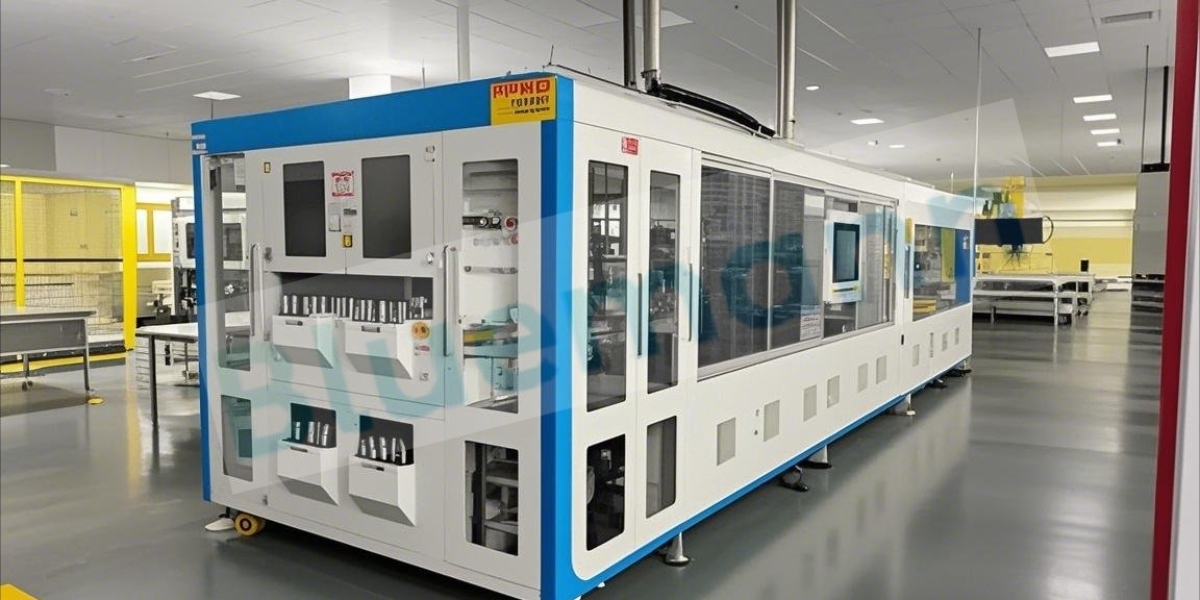

The photovoltaic (PV) industry is entering a new era of manufacturing competition. As solar cell efficiency continues to improve and wafer formats rapidly evolve from M6 and M10 to larger G12 platforms, manufacturers are facing increasing pressure to deliver higher throughput without compromising product quality.
In this environment, production equipment has become a decisive factor in determining manufacturing competitiveness. Among all production stages, solar cell interconnection plays a particularly critical role. Even minor alignment deviations or soldering defects can negatively impact module efficiency, reliability, and long-term energy yield.
For this reason, investing in a high-performance wholesale string welding machine solution is no longer simply an equipment upgrade—it has become a strategic decision for solar manufacturers seeking sustainable growth and large-scale production efficiency.
Why String Welding Technology Matters More Than Ever
A photovoltaic module's performance depends heavily on the quality of its cell interconnections.
During the stringing process, individual solar cells are electrically connected using conductive ribbons. If the welding process introduces excessive heat, poor alignment, or uneven stress distribution, manufacturers may encounter:
- Cell micro-cracks
- Increased cell-to-module (CTM) losses
- Reduced power output
- Long-term reliability issues
- Higher production scrap rates
As modern cells become thinner and more efficient, production tolerances become increasingly demanding. This has accelerated the adoption of fully automated, high-precision string welding systems.
Three Critical Advantages of Advanced String Welding Machines
1. High-Capacity Production for Gigawatt-Scale Manufacturing
Today's utility-scale module factories operate under enormous pressure to maximize output while controlling manufacturing costs.
Advanced string welding machines utilize:
- Multi-track processing systems
- High-speed servo motion control
- Automated cell feeding technology
- Rapid thermal soldering systems
These technologies allow manufacturers to process significantly more cells per hour while maintaining consistent quality standards.
The result is:
✓ Higher throughput
✓ Lower labor dependency
✓ Reduced operational costs
✓ Faster return on investment
For manufacturers operating multi-gigawatt facilities, equipment productivity directly influences overall profitability.
2. Precision Alignment for Maximum Module Efficiency
Cell alignment accuracy is one of the most important factors affecting module performance.
Modern string welding equipment incorporates high-resolution vision systems capable of detecting cell positions with micron-level precision. Combined with intelligent positioning algorithms, these systems ensure consistent ribbon placement throughout production.
Benefits include:
- Reduced soldering defects
- Improved fill factor (FF)
- Lower CTM power loss
- Better electrical conductivity
- Enhanced module consistency
Precise thermal control is equally important. Advanced infrared or induction welding technologies maintain optimized temperature profiles, minimizing thermal stress on delicate silicon wafers and preventing crack formation during manufacturing.
3. Flexible Compatibility with Emerging Solar Technologies
The photovoltaic industry evolves rapidly.
Manufacturers must continuously adapt to:
- M6, M10, and G12 wafer formats
- Multi-Busbar (MBB) architectures
- Zero-Busbar (0BB) technologies
- Half-cell designs
- Third-cut and shingled cell structures
- TOPCon solar cells
- HJT solar cells
Production lines designed around fixed specifications can quickly become outdated.
Modern string welding systems solve this challenge through modular engineering that allows rapid adjustment for different cell formats and interconnection structures.
This flexibility helps manufacturers protect their investment while remaining competitive in a constantly changing market.
Bluemann's Approach to Intelligent PV Manufacturing
As automation requirements become more sophisticated, equipment suppliers must provide more than mechanical speed—they must deliver manufacturing intelligence.
Bluemann has developed advanced string welding solutions specifically designed to meet the demands of modern photovoltaic production environments.
By integrating:
- High-precision servo-driven positioning systems
- Intelligent vision inspection technology
- Real-time process monitoring
- Automated quality control functions
Bluemann helps manufacturers achieve higher production stability while minimizing material waste and process variability.
The system supports both traditional PERC cell production and next-generation technologies such as TOPCon and HJT, providing manufacturers with a future-ready platform capable of adapting to industry transitions.
The Business Value of Wholesale String Welding Machine Procurement
For large-scale manufacturers, equipment purchasing decisions extend beyond technical performance.
Procuring string welding machines through wholesale or multi-line deployment strategies offers several operational advantages.
Standardized Maintenance Management
Using identical equipment across multiple production lines simplifies:
- Spare parts inventory
- Technician training
- Maintenance scheduling
- Troubleshooting procedures
This significantly reduces downtime and operational complexity.
Unified Software and Process Control
When multiple production lines operate on the same automation platform, manufacturers can:
- Synchronize software updates
- Standardize process parameters
- Maintain consistent product quality
- Improve data collection and analysis
This creates greater manufacturing transparency and efficiency.
Lower Total Cost of Ownership (TCO)
Wholesale procurement often reduces overall equipment investment while improving long-term operating economics.
Manufacturers can allocate saved capital toward:
- Capacity expansion
- Quality inspection systems
- Electroluminescence (EL) testing equipment
- Advanced material sourcing
Ultimately improving overall factory competitiveness.
The Future of Photovoltaic Module Assembly
Global solar deployment continues to accelerate as countries pursue decarbonization and energy security goals.
To meet rising demand, manufacturers must adopt production systems that combine:
- High speed
- Precision control
- Flexible compatibility
- Intelligent automation
A modern string welding machine is no longer just a production tool—it has become a strategic asset that directly influences module quality, factory efficiency, and market competitiveness.
By working with technology-driven partners such as Bluemann, solar manufacturers can build highly efficient production lines capable of supporting the next generation of photovoltaic innovation while maintaining the reliability required for decades of field performance.