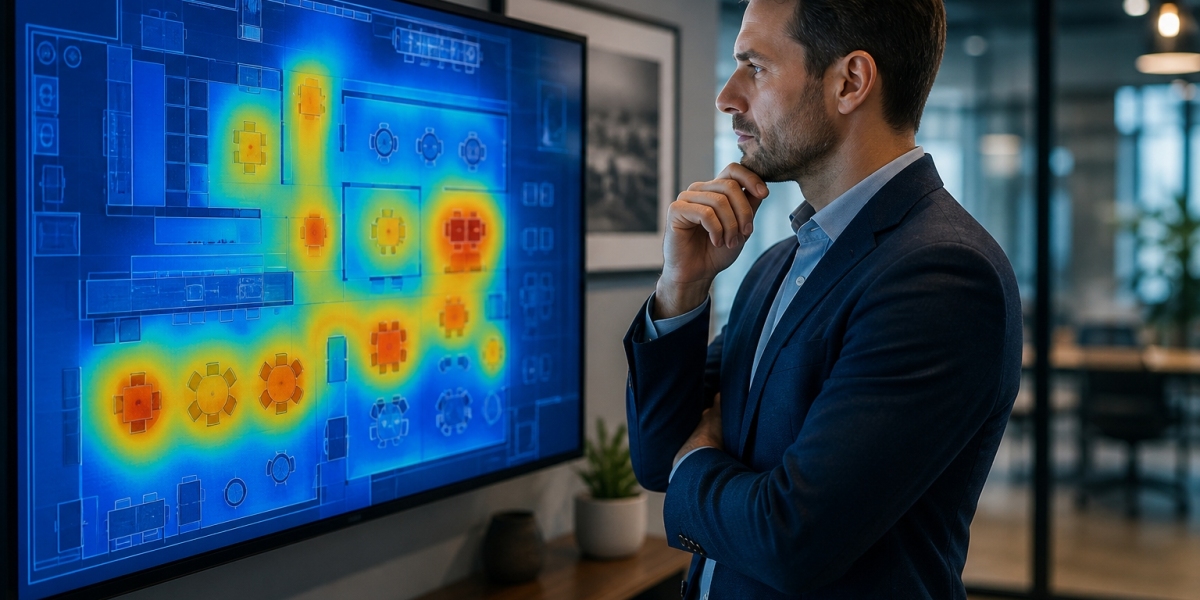

Restaurants generate data constantly — tickets, labor hours, delivery mix, and guest reviews — yet many teams still make major decisions by gut feel. That is why interest in restaurant analysis keeps rising. Used well, analytics turns scattered operational signals into clearer priorities for growth, cost control, and site strategy.
At unit level, restaurant analysis usually starts with sales by daypart, category mix, and weather-adjusted trends. Managers who see Monday lunch softening early can adjust prep and staffing the same week. Waiting for a monthly P&L is too slow in a business where perishable inventory and hourly labor move every day.
For multi-location brands, the stakes are higher. restaurant analysis should reveal which sites outperform on labor productivity, which menus travel well, and where local preferences diverge. Without standardized definitions, comparisons mislead: one store’s “busy” may simply reflect tourist season or a temporary competitor closure.
Location-linked analytics deserve special focus. Foot traffic, trade-area demographics, and competitive intensity help explain why two identically operated restaurants produce different results. When operators connect in-store KPIs to site characteristics, they improve both current performance and future expansion filters.
Create a one-page scorecard for restaurant analysis with red / amber / green thresholds. Scorecards travel better across teams than long narrative reports alone.
AI tools can accelerate pattern detection — forecasting covers, flagging anomalies, or ranking candidate sites — but they do not replace operating judgment. The best teams treat model output as a hypothesis generator. They verify on the ground, then encode what they learn back into the playbook.
Implementation matters as much as software logos. Clean POS mapping, consistent recipe IDs, and shared KPI dictionaries are unglamorous foundations. If chicken sandwich sales are coded five different ways across locations, restaurant analysis will produce noise. Data governance is a leadership responsibility.
Privacy and ethics also belong in the conversation. Guest data, employee monitoring, and mobility datasets must be handled responsibly. Transparent policies protect brand trust while still enabling useful insight. Restaurant Site Finder. Sustainable analytics programs respect both performance goals and people.
A practical cadence helps: daily flash reports for managers, weekly deep dives for operators, and monthly strategic reviews for owners. Each layer of restaurant analysis should trigger decisions — change a schedule, reprice an item, reallocate marketing, or pause a weak site search.
Unit vs Multi-Location Views
In short, restaurant analysis is not about drowning in charts. It is about shortening the time between signal and action. Restaurants that build that habit improve margins and make expansion bets with far less drama.
If you apply the ideas in this guide, restaurant analysis becomes less mysterious and more operational. Keep measuring, keep refining, and connect every insight to an action your team can take within the next operating week.
When operators study restaurant analysis carefully, they often discover that small process changes create outsized financial results over a full year of trading.
Cross-functional alignment helps — marketing, operations, and finance should share one definition of success when discussing restaurant analysis.
In practice, operators who treat restaurant analysis as an ongoing operating system — not a static report — tend to course-correct faster when markets shift.
Ultimately, restaurant analysis is most valuable when it informs a clear go / no-go decision or a prioritized action list for the next 90 days.
When operators study restaurant analysis carefully, they often discover that small process changes create outsized financial results over a full year of trading.
Teams that document assumptions around restaurant analysis can revisit them after opening and improve forecasting accuracy for the next location.
Ultimately, restaurant analysis is most valuable when it informs a clear go / no-go decision or a prioritized action list for the next 90 days.
Location-Linked Performance

Seasonality matters: holidays, tourism peaks, and campus calendars can temporarily distort signals related to restaurant analysis.
Investors and landlords increasingly expect evidence-based reasoning, which is why restaurant analysis has become a standard part of professional diligence.
In practice, operators who treat restaurant analysis as an ongoing operating system — not a static report — tend to course-correct faster when markets shift.
Teams that document assumptions around restaurant analysis can revisit them after opening and improve forecasting accuracy for the next location.
A quarterly review cadence keeps restaurant analysis from becoming a one-time planning exercise that is forgotten after opening day.
In practice, operators who treat restaurant analysis as an ongoing operating system — not a static report — tend to course-correct faster when markets shift. For related reading, explore ai tools for analyzing performance by location or daypart.
Comparing peer benchmarks is useful, but local labor markets, rent, and cuisine style can shift what “good” looks like for restaurant analysis.
When operators study restaurant analysis carefully, they often discover that small process changes create outsized financial results over a full year of trading.
A quarterly review cadence keeps restaurant analysis from becoming a one-time planning exercise that is forgotten after opening day.
Building an Analytics Cadence
In practice, operators who treat restaurant analysis as an ongoing operating system — not a static report — tend to course-correct faster when markets shift.
Teams that document assumptions around restaurant analysis can revisit them after opening and improve forecasting accuracy for the next location. For related reading, explore restaurant location analysis.
When operators study restaurant analysis carefully, they often discover that small process changes create outsized financial results over a full year of trading.
In practice, operators who treat restaurant analysis as an ongoing operating system — not a static report — tend to course-correct faster when markets shift.
Seasonality matters: holidays, tourism peaks, and campus calendars can temporarily distort signals related to restaurant analysis.
A quarterly review cadence keeps restaurant analysis from becoming a one-time planning exercise that is forgotten after opening day.
Investors and landlords increasingly expect evidence-based reasoning, which is why restaurant analysis has become a standard part of professional diligence.
In practice, operators who treat restaurant analysis as an ongoing operating system — not a static report — tend to course-correct faster when markets shift.
Comparing peer benchmarks is useful, but local labor markets, rent, and cuisine style can shift what “good” looks like for restaurant analysis. For related reading, explore restaurant feasibility study.
In practice, operators who treat restaurant analysis as an ongoing operating system — not a static report — tend to course-correct faster when markets shift.