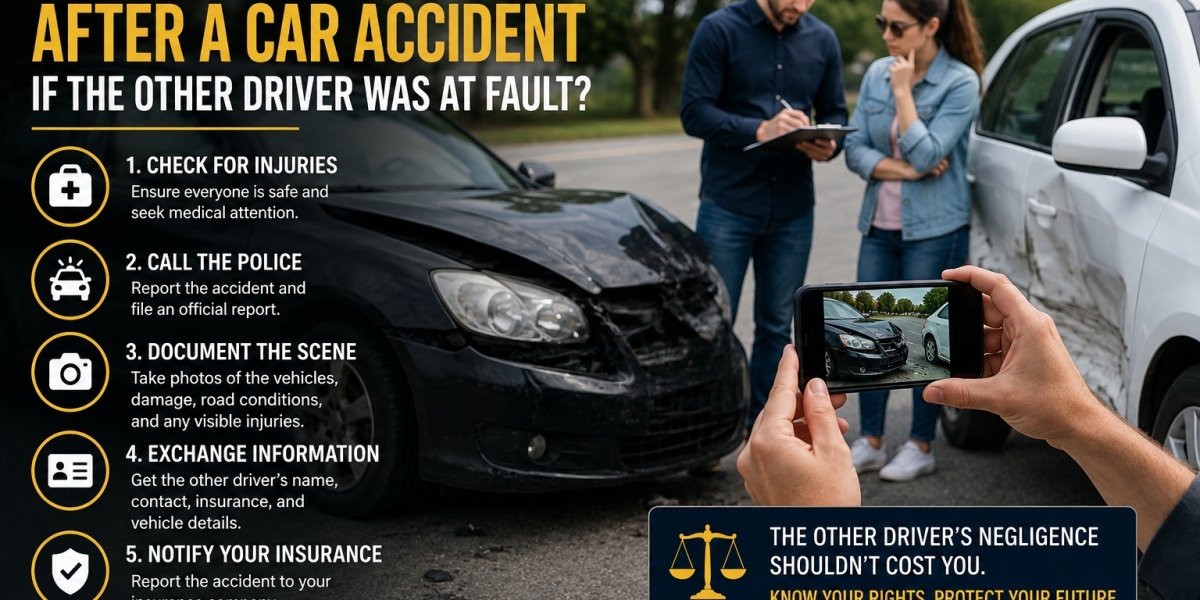

A car accident can leave you dealing with injuries, vehicle damage, medical bills, and questions about what to do next. If another driver caused the crash, knowing how to protect your rights can be just as important as getting your vehicle repaired. An experienced Texas car accident lawyer can help investigate the collision, deal with insurance companies, and evaluate whether you may be entitled to compensation.
1. Check for Injuries and Get to Safety
Your health and safety should come first after a car accident. Check yourself and your passengers for injuries and call 911 if anyone needs emergency medical attention.
If the vehicles can be moved safely, getting them out of active traffic may help prevent another collision. Turn on your hazard lights and use warning devices if they are available.
Even when you feel fine immediately after a crash, consider getting medical attention. Some injuries, including whiplash, soft-tissue injuries, and certain head or back injuries, may not become obvious right away.
Medical records can also help document the connection between the accident and your injuries.
2. Report the Accident to the Police
If another driver was at fault, having an official accident report can be important when pursuing a car accident claim.
Tell the responding officer what happened as accurately as possible. Avoid guessing about speed, distances, or other details you cannot remember.
The police report may contain information about the drivers, vehicles, road conditions, witnesses, citations, and the officer's observations. These details can become useful when insurance companies or attorneys investigate who caused the collision.
3. Document the Accident Scene
If your injuries and the circumstances allow, take photographs and videos of the crash scene before vehicles or other evidence are moved.
Try to document:
Damage to all vehicles involved
Your visible injuries
License plates
Road conditions
Traffic signs and signals
Skid marks and debris
Vehicle positions
Property damage
Weather or visibility conditions
You should also obtain the other driver's name, contact information, driver's license information, and insurance details.
If anyone witnessed the accident, ask for their contact information. Independent witnesses may provide valuable evidence about what happened.
Harrison Davis Morrison Jones emphasizes the importance of investigating motor vehicle accidents because evidence can be lost and witnesses can become difficult to locate as time passes.
4. Avoid Admitting Fault
After a collision, emotions can run high. Be careful about what you say at the accident scene.
You can cooperate with police and provide factual information without admitting that the accident was your fault. Avoid statements such as "I'm sorry" or "I wasn't paying attention" if you do not know what caused the crash.
Determining liability may require reviewing photographs, witness statements, traffic evidence, vehicle damage, police reports, and other information.
Even if you believe the other driver clearly caused the accident, let the evidence establish what happened.
5. Notify Your Insurance Company
You should generally notify your own insurance company about the accident according to the terms of your policy.
However, notifying an insurer does not mean you should automatically accept its assessment of fault or the value of your claim.
Texas follows a fault-based system for car accidents. In general, the driver responsible for causing the accident can be responsible for damages resulting from the collision.
Insurance companies may investigate claims closely, and an adjuster may ask questions about your injuries, treatment, accident circumstances, or prior medical history.
Be truthful, but avoid speculating or minimizing your injuries.
6. Be Careful With the Other Driver's Insurance Company
If the other driver was responsible, their insurance company may contact you about the accident.
Remember that an insurance adjuster's goal is to evaluate and resolve the claim. You do not have to assume that the insurer's first settlement offer accurately reflects the full value of your losses.
Before accepting a settlement, consider whether you fully understand:
Your current medical expenses
Future treatment needs
Lost wages
Reduced earning capacity
Vehicle damage
Pain and suffering
The long-term effects of your injuries
Harrison Davis Morrison Jones specifically notes that insurance companies may attempt to minimize auto accident claims, which is one reason the firm recommends experienced legal representation in serious motor vehicle cases.
7. Keep Records of Your Injuries and Financial Losses
Start a file containing everything related to the accident.
Keep copies of:
Medical bills
Medical records
Prescription receipts
Physical therapy records
Repair estimates
Insurance correspondence
Pay stubs
Employer documentation
Transportation expenses
Accident photographs
You may also want to keep a personal record of how your injuries affect your daily life.
For example, note whether you have difficulty sleeping, working, driving, exercising, caring for family members, or performing ordinary activities.
These records can help demonstrate the broader impact of an accident beyond the initial vehicle damage.
8. Determine Whether Other Parties May Be Responsible
The driver may not always be the only party that could have legal responsibility.
Depending on the circumstances, an investigation could identify other potentially responsible parties. For example, a vehicle manufacturer may potentially be involved if a defective vehicle component contributed to the crash. Harrison Davis Morrison Jones handles auto defect cases involving issues such as defective brakes, tires, airbags, seatbelts, and other vehicle components.
Similarly, a drunk driving accident may involve additional legal issues when an establishment's conduct contributed to the driver's intoxication. The firm's motor vehicle practice includes drunk driving accidents and Texas Dram Shop cases.
This is why determining liability should involve more than simply asking which driver received a traffic citation.
9. Do Not Wait Too Long to Explore Your Legal Options
Evidence can become harder to obtain as time passes. Witnesses may forget details, surveillance footage may no longer be available, and important accident-related records may become more difficult to locate.
Texas also has deadlines that can affect your ability to bring a personal injury lawsuit. The firm's Texas car accident page states that, in most cases, an injury lawsuit against another driver generally must be filed within two years of the accident. Different rules can apply in specific circumstances, including claims involving governmental entities.
Because deadlines and exceptions can vary, it is important to discuss your situation with a qualified Texas attorney rather than assuming you have unlimited time.
When Should You Contact a Car Accident Lawyer?
You may benefit from speaking with a car accident attorney if you suffered significant injuries, the other driver disputes responsibility, an insurance company is offering a settlement you believe is inadequate, or multiple parties may be involved.
An experienced trial lawyer can investigate the accident, gather evidence, communicate with insurers, evaluate your damages, and pursue the appropriate legal strategy.
Harrison Davis Morrison Jones represents clients in motor vehicle accident cases and describes its approach as including investigation, insurance handling, and pursuing compensation for accident-related losses.
What Should You Do After a Car Accident If the Other Driver Was at Fault?
After a car accident, prioritize your safety and medical care. Report the collision, document the scene, collect information from witnesses and drivers, notify your insurer, and keep detailed records of your injuries and financial losses.
Most importantly, do not assume that the insurance company's first assessment or settlement offer tells the complete story. If you suffered serious injuries or the circumstances of the crash are disputed, an experienced Texas car accident attorney can help you understand your legal options and determine the appropriate next steps.
Frequently Asked Questions
1. What should I do immediately after a car accident?
Check for injuries, call 911 when necessary, move to a safe location if possible, exchange information with the other driver, document the accident scene, and seek medical attention.
2. Can I file a claim if the other driver caused my accident?
Potentially, yes. Texas generally follows a fault-based system, meaning the person responsible for causing an accident may be responsible for resulting damages. The specific facts of the collision determine whether you may have a viable claim.
3. What compensation can I seek after a car accident?
Depending on the circumstances, compensation may include medical expenses, future medical care, lost wages, reduced earning capacity, property damage, pain and suffering, and other losses associated with the accident and injuries.
4. Should I accept the insurance company's first settlement offer?
Do not feel pressured to accept an offer before understanding the full extent of your injuries and losses. Once a settlement is accepted, you may have limited ability to pursue additional compensation for the same claim.
5. How long do I have to file a car accident lawsuit in Texas?
Texas generally provides a two-year limitations period for many personal injury claims arising from a car accident, but exceptions and different deadlines can apply. Because missing a deadline can affect your legal rights, speak with a qualified Texas attorney about your specific circumstances.