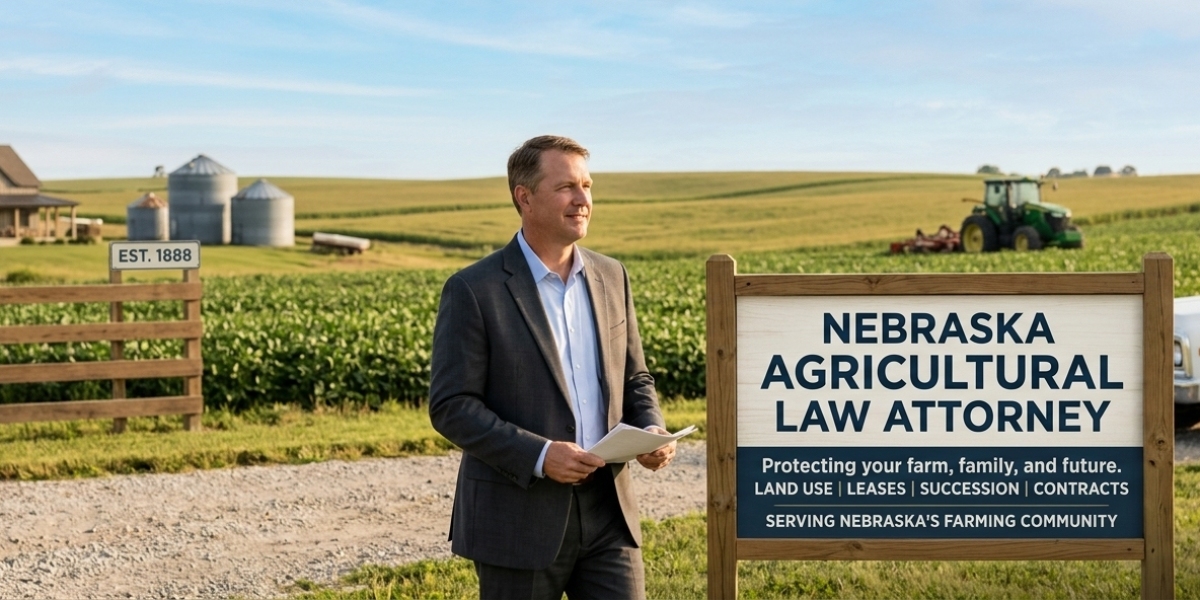

Running a farm or ranch in the Cornhusker State requires balancing early mornings in the field with complex regulatory and business management off the field. Agricultural operations face distinct challenges, from volatile commodity markets and unpredictable weather to complicated land ownership structures and strict environmental regulations.
Without solid legal groundwork, decades of hard work can be compromised by a single poorly drafted lease, an improper business entity, or an incomplete estate plan. Safeguarding your land, livestock, and equipment requires proactive legal strategies tailored to the realities of modern farming.
Protecting Your Farm Through Strategic Entity Structuring
Operating a agricultural enterprise as a sole proprietorship or standard partnership exposes your personal assets to business liabilities. A single equipment accident, chemical drift claim, or contract dispute could jeopardize your land and equipment.
Establishing the right legal entity creates a protective shield around your operation while offering tax advantages and operational clarity.
Sole Proprietorship vs. LLCs and Corporations
Limited Liability Companies (LLCs): Protect personal assets from farm debts and lawsuits, allow flexible management, and simplify pass-through tax treatment.
Corporations (C-Corp or S-Corp): Beneficial for larger family operations seeking structured share distribution, though they require stricter corporate governance and record-keeping.
General Partnerships: Easy to form but carry joint liability, meaning one partner's mistake puts the entire operation's assets at risk.
Separation of Land and Operating Assets
Land-Holding LLCs: Holding real estate in a distinct legal entity insulates the dirt from operational risks like equipment liability or crop failure.
Operating LLCs: Managing day-to-day farming activities, machinery, and crop sales in a separate entity limits potential financial liabilities to operational assets alone.
Lease Agreements: Formalizing intra-family cash rent or crop-share agreements between your land-holding entity and operating entity strengthens tax positions and asset protection.
Securing Land and Equipment Contracts
Contracts serve as the backbone of agricultural operations. Handshake deals may carry deep tradition in rural communities, but they offer little legal protection when commodity prices shift, weather ruins yields, or property lines are questioned.
Every agreement involving land, labor, or machinery should be clearly documented to prevent misunderstandings and costly courtroom disputes.
Agricultural Leases and Custom Farming Contracts
Written farm leases eliminate ambiguity regarding rent schedules, termination deadlines, conservation practices, and maintenance responsibilities.
Cash Rent Agreements: Specify payment dates, default clauses, and nutrient management expectations clearly.
Crop-Share Agreements: Outline the precise division of input costs, grain storage responsibilities, and harvest timelines.
Notice of Termination: Nebraska law requires strict adherence to lease termination notice deadlines; written contracts prevent costly holdover tenant disputes.
Real Estate and Energy Agreements
As renewable energy and infrastructure projects expand across rural areas, landowners face complex easement and lease offers. Partnering with a skilled agricultural law attorney ensures your property rights and land usability remain intact.
Wind and Solar Leases: Review term lengths, liability indemnity, crop compensation rates, and mandatory decommissioning clauses before signing.
Easement Rights: Protect drainage systems, access roads, and soil conservation structures when negotiating utility or access easements.
1031 Tax-Deferred Exchanges: Structure land purchases and sales correctly to defer capital gains taxes when reinvesting in agricultural real estate.
Preserving the Family Legacy with Succession Planning
The most critical challenge facing family farms is passing the operation to the next generation without triggering high taxes, family friction, or forced liquidation. An estate plan meant for a suburban homeowner will not properly handle farm machinery, land division, and multi-generation debt.
Partnering with an experienced nebraska agricultural law attorney allows you to design a clear, legally sound succession strategy that keeps the farm intact. Working with specialized legal professionals at Midwest Ag Law ensures your trust funding, entity retitling, and land transfers match the operational needs of Nebraska farm families.
Farm Succession Tools and Trust Funding
Revocable Living Trusts: Keep your estate out of probate court, maintain family privacy, and allow uninterrupted farm operations upon your passing.
Trust Funding: Retitle land, equipment, and bank accounts into the trust; an unfunded trust fails to protect assets from probate rules.
Buy-Sell Agreements: Define clear procedures for family members or partners to purchase shares if an owner passes away, retires, or exits the business.
Balancing On-Farm and Off-Farm Heirs
Operational Control: Grant voting control or machinery ownership to the farming children who manage daily operations to ensure continuity.
Fair vs. Equal Distributions: Use non-farm assets, life insurance policies, or specialized land trusts to provide equity for off-farm children without forcing the sale of farmland.
First Right of Refusal: Include options that allow farming heirs to purchase or rent land from non-farming siblings at fair market rates before ground is offered to outside buyers.
Navigating Regulatory and Water Rights Compliance
Nebraska agriculture operates under strict state and federal environmental regulations. Navigating water usage, chemical application, and grain marketing guidelines requires ongoing diligence to avoid steep penalties and operational disruptions.
Water Rights and Drainage
Natural Resources Districts (NRDs): Comply with local NRD regulations regarding groundwater pumping limits, well spacing, and certified irrigated acres.
Surface Water Rights: Maintain compliance with state appropriation permits and historical usage reporting to preserve senior water rights.
Drainage Disputes: Address surface water runoff and tile installation issues within Nebraska drainage law frameworks to prevent neighbor disputes.
Environmental Compliance
Livestock Operations: Ensure proper permitting and waste management plans are in place for concentrated animal feeding operations (CAFOs).
Chemical Drift and Liability: Implement clear risk management protocols for pesticide applications and maintain comprehensive liability insurance policies.
Conclusion
Securing the legal foundation of your agricultural operation is as vital as managing your crops or livestock. By establishing robust entity structures, formalizing land agreements, staying compliant with water regulations, and building an airtight succession plan, you protect your livelihood from unexpected disruptions. Proactive planning today ensures that the operation you built continues to thrive for generations to come.
Frequently Asked Questions
Q1: Why is an LLC better than a sole proprietorship for a farm?
An LLC protects personal assets like your home or personal accounts from farm liabilities, debt, and lawsuits.
Q2: What happens if a Nebraska farm lease lacks a written agreement?
Oral leases default to state statutory rules, which require specific termination deadlines and create uncertainty over input costs and conservation duties.
Q3: How do I leave the farm to one child without unfairness to non-farming children?
Use non-farm assets, life insurance, or structured trusts with buy-sell provisions to balance inheritances without forcing a land sale.
Q4: Why is trust funding so important in farm estate planning?
Writing a trust is not enough; you must retitle land, machinery, and accounts to the trust to avoid probate court delays.
Q5: What role do Natural Resources Districts (NRDs) play in farm legal rights?
NRDs regulate groundwater pumping, irrigated acreage certification, and well permits, making compliance vital for land value and operation.