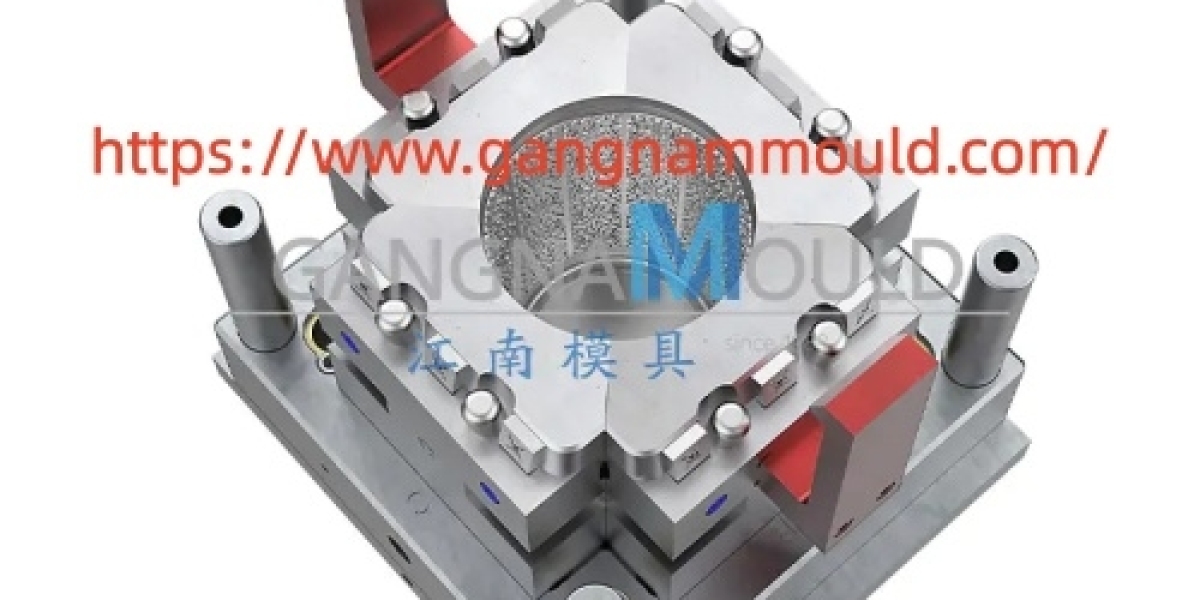

Trash Bin Mould selection becomes an important consideration when manufacturers plan large plastic bins for commercial, industrial, municipal, or household applications. Larger products place greater demands on material flow, thermal control, structural support, and part release. The tooling needs to match the container geometry, resin characteristics, production volume, and injection equipment rather than simply being scaled up from a smaller design. Wall thickness deserves particular attention because uneven sections can influence filling, cooling, shrinkage, and dimensional stability.
One of the first features buyers should review is the cavity structure. Large containers often have broad surfaces and deep forming areas, so the tooling must maintain suitable rigidity during injection. A stable base, properly supported plates, and carefully arranged components can help keep the assembly aligned under operating loads. The exact configuration depends on product dimensions and machine specifications. Gangnammould can work around these project requirements when developing tooling for different container sizes and applications.
Wall geometry is another area worth discussing before production begins. A large plastic container does not necessarily become stronger simply by making every section thicker. Excessive thickness can extend cooling requirements and increase the chance of sink marks or uneven shrinkage. Strategic ribs and reinforcing features can provide stiffness while avoiding unnecessary material concentration. Gradual transitions between different sections can also support more predictable filling and cooling behavior.
Cooling design becomes particularly important when the product has broad walls or deep sections. Heat needs to leave the molded component in a reasonably balanced manner so different areas do not experience substantially different cooling conditions. Poor thermal balance may contribute to deformation and longer production cycles. Large container tooling can therefore benefit from cooling circuits arranged according to the geometry of the cavity and core.
Gate arrangement deserves similar attention. A large cavity may require a carefully planned filling strategy to distribute molten material across the product without creating unnecessary flow imbalance. Gate location can influence weld lines, pressure requirements, filling behavior, and visual results. Depending on the product design, material, machine, and production target, engineers may evaluate single or multiple gate arrangements through flow analysis before machining begins.
Draft and release design should also be considered early. Deep walls can create greater contact between the finished part and forming surfaces, making release planning important. Suitable draft angles, smooth transitions, and an appropriate ejection arrangement can help reduce resistance during removal. The actual angle depends on resin, texture, geometry, and other project conditions. Reinforced areas around handles, wheel mounts, rims, or attachment points may also require special attention because these details can influence both forming and release.
Venting is another practical feature that should not be overlooked. When molten resin enters a large cavity, trapped air needs suitable paths to escape. Insufficient venting may contribute to burn marks, incomplete filling, or surface problems in difficult areas. Vent locations should be considered alongside gates, ribs, corners, and the overall flow path rather than added only after production problems appear.
Material selection also affects tooling decisions. HDPE and PP are commonly associated with large plastic containers, but the appropriate resin depends on the intended use, impact requirements, environmental conditions, appearance, and recycling considerations. Shrinkage behavior should be included during engineering so finished dimensions remain aligned with the product specification. A tooling design that works for one resin grade may require adjustment when another material is selected.
Maintenance is worth considering before the tool enters production. Water connections, moving components, wear areas, ejector systems, and accessible service points should be arranged with future maintenance in mind. A practical structure can make inspection and replacement work easier when production continues over an extended period. Buyers should also discuss expected production volume, machine compatibility, testing arrangements, spare components, and acceptance criteria before finalizing the project.
Gangnammould approaches large container tooling around the actual requirements of each project, including product dimensions, material selection, machine conditions, cooling strategy, ejection needs, and production expectations. Clear communication during the design stage helps turn a product concept into a workable manufacturing solution while allowing potential issues to be reviewed before steel processing begins.
For manufacturers preparing a new project, reviewing tooling structure before production can make the purchasing process more organized. Product specifications, application requirements, drawings, material details, and machine information provide a useful starting point for engineering discussions. Available solutions and product information can be viewed at https://www.gangnammould.com/product/ when planning a new large container manufacturing project.