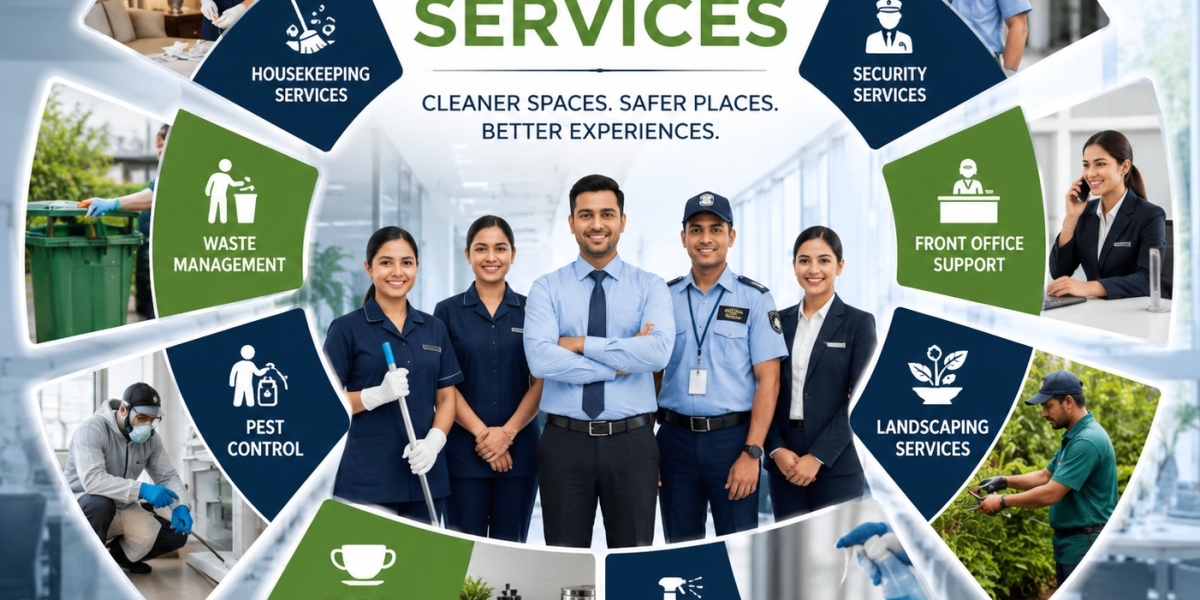

The way businesses manage their workplaces is changing rapidly. Cleanliness, security, housekeeping, hygiene, landscaping, and workplace support are no longer treated as basic operational tasks. Businesses now expect these functions to contribute directly to productivity, employee satisfaction, customer experience, and brand reputation. This is where Soft Services are becoming increasingly important.
In 2026, modern facility management is expected to become more technology-driven, organised, measurable, and customer-focused. Businesses will look beyond simply hiring service staff and will increasingly focus on service quality, trained professionals, reporting systems, sustainability, and consistent performance.
What Are Soft Services?
Soft Services include the people-focused and experience-focused activities required to keep a facility comfortable, clean, safe, and welcoming. Common examples include housekeeping, security, reception services, pest control, waste management, landscaping, janitorial services, and hygiene management.
Unlike technical facility services that focus on equipment, electrical systems, HVAC, and building infrastructure, Soft Services focus heavily on people and the daily experience within a facility.
For businesses, this distinction is important because a well-maintained building can still provide a poor experience if its cleanliness, security, reception, or general support services are not properly managed.
Why Soft Services Matter More in 2026
Workplaces in 2026 are becoming more dynamic. Employees, customers, visitors, and business partners expect professional and well-maintained environments. A dirty reception area, poor washroom hygiene, unmanaged waste, or inconsistent security can negatively affect how people perceive an organisation.
Modern Soft Services help businesses maintain consistent standards across their facilities. They can also reduce operational problems by ensuring that routine tasks are planned, monitored, and performed according to defined standards.
Businesses are also becoming more conscious of employee wellbeing and workplace experience. A clean and organised workplace can create a more comfortable environment while professional security and reception services can improve the experience of employees and visitors.
Technology Will Transform Soft Services
One of the biggest changes businesses should expect in 2026 is greater use of technology in facility management.
Digital reporting, mobile workforce applications, attendance systems, task-management platforms, automated alerts, and performance dashboards can help facility managers monitor daily operations more effectively.
For example, instead of relying entirely on manual registers, managers can use digital systems to track cleaning schedules, inspections, complaints, staff attendance, and completed tasks. This creates better visibility and makes it easier to identify areas that require improvement.
Technology will not replace the human element of Soft Services. Instead, it can help teams work more efficiently and allow managers to make better decisions using real-time operational information.
Higher Expectations for Hygiene and Cleanliness
Cleanliness will remain one of the most important priorities for businesses in 2026. Offices, retail spaces, hospitals, educational institutions, residential communities, and commercial buildings all require different cleaning and hygiene standards.
Businesses are expected to place greater emphasis on regular inspections, high-touch areas, washroom hygiene, waste segregation, cleaning schedules, and quality control.
Professional housekeeping teams will need proper training, suitable equipment, standard operating procedures, and regular supervision. This approach can create more consistent results than treating cleaning as a basic routine activity.
Security and Soft Services Will Work Together
Security is another major area where expectations are increasing. Modern facilities require more than simply placing security personnel at an entrance.
Security teams may be responsible for visitor management, access control, parking coordination, incident reporting, emergency response support, and monitoring of daily activities.
When security is integrated with other Soft Services, businesses can create a more coordinated facility management system. Housekeeping, reception, security, maintenance teams, and management can communicate more effectively and respond faster when an issue occurs.
Focus on Sustainability
Sustainability will also influence Soft Services in 2026. Businesses are increasingly looking for ways to reduce waste, use resources responsibly, and maintain environmentally conscious workplaces.
Soft service teams can contribute through waste segregation, responsible cleaning practices, efficient use of consumables, sustainable landscaping, and better resource management.
The goal is not simply to make a facility look clean. Modern facility management should also consider how services affect the environment and the long-term operational efficiency of the business.
Data and Performance Measurement
Another important trend will be measurable service performance. Businesses will increasingly want to know whether their facility management investment is producing the expected results.
Key performance indicators can include complaint resolution time, cleaning quality, staff attendance, inspection scores, incident response, task completion rates, and customer feedback.
Regular reporting allows businesses to identify weaknesses and improve service delivery. It also creates greater accountability between the business and its facility management service provider.
Skilled Professionals Will Remain Essential
Although technology will become more important, trained people will remain at the centre of Soft Services.
Professional housekeeping staff, security personnel, supervisors, reception teams, and facility coordinators need proper training to perform their responsibilities effectively. Communication skills, workplace etiquette, safety awareness, emergency response, and service discipline can significantly influence the overall quality of a facility.
Businesses should therefore evaluate service providers not only on pricing but also on recruitment standards, training, supervision, experience, and quality-control processes.
How Businesses Should Prepare for 2026
Businesses planning their facility management strategy should first identify their specific operational requirements. Different facilities need different combinations of housekeeping, security, pest control, landscaping, waste management, reception, and support services.
They should establish clear service standards, define responsibilities, monitor performance, and conduct regular reviews. Technology can then be introduced where it provides genuine operational value.
Choosing an experienced service partner can also help businesses manage multiple services through one coordinated system rather than handling each requirement separately.
FAQs About Soft Services
1. What are Soft Services in facility management?
Soft Services are people-focused facility services such as housekeeping, security, pest control, landscaping, reception, waste management, and hygiene support.
2. Why are Soft Services important for businesses in 2026?
Soft Services help businesses maintain clean, safe, organised workplaces while improving employee experience, customer satisfaction, operational efficiency, and brand image.
3. How is technology changing Soft Services?
Technology helps teams manage attendance, inspections, cleaning schedules, complaints, reporting, task completion, and performance through digital facility management systems.
4. What are examples of Soft Services?
Common examples include housekeeping, security, reception, pest control, landscaping, waste management, janitorial services, hygiene management, and visitor assistance.
5. Can Soft Services reduce business costs?
Yes. Better planning, supervision, reporting, resource management, and preventive service practices can reduce operational inefficiencies and unnecessary facility-related expenses.
6. Are Soft Services suitable for corporate offices?
Yes. Corporate offices commonly use housekeeping, security, reception, pest control, waste management, landscaping, and hygiene services to maintain professional workplaces.
7. How can businesses measure Soft Services quality?
Businesses can measure service quality through inspections, customer feedback, complaint resolution time, attendance, task completion, hygiene audits, and defined performance indicators.
8. Will technology replace Soft Services workers?
No. Technology mainly supports workers by improving communication, monitoring, reporting, scheduling, and accountability. Skilled professionals remain essential for service delivery.
Conclusion
The future of Soft Services is moving toward better technology, stronger service standards, trained professionals, measurable performance, sustainability, and improved workplace experiences. Businesses in 2026 will increasingly expect facility management to be proactive rather than simply reactive.
Gurgaon Protection Force is a professional facility management and security service provider offering solutions designed to support businesses with reliable, organised, and professional facility operations. With a focus on security, housekeeping, facility management, trained personnel, and service quality, Gurgaon Protection Force helps organisations create safer, cleaner, and better-managed workplaces.
For businesses looking to strengthen their facility management strategy in 2026, choosing the right Soft Services partner can be an important step toward improving daily operations, workplace standards, and overall business experience.