
If you experience sudden or unexplained vision loss after taking Ozempic, it is important to take the symptoms seriously. You may be wondering, “What should you do if you experience vision loss after Ozempic?” The first priority is getting prompt medical evaluation to determine what is causing the vision problem. If you believe your injury may be connected to Ozempic or semaglutide, Vision Loss Lawyer provides information about potential pharmaceutical injury claims involving serious vision problems.
Why Is Ozempic Being Associated With Vision Loss?
Ozempic contains semaglutide, a glucagon-like peptide-1 receptor agonist (GLP-1 RA) used to treat type 2 diabetes. Researchers have been investigating a potential association between semaglutide and nonarteritic anterior ischemic optic neuropathy (NAION), a condition that can cause sudden vision loss.
A 2024 JAMA Ophthalmology study involving 16,827 patients found a higher risk of NAION among patients prescribed semaglutide compared with patients prescribed non-GLP-1 medications. The researchers noted that the findings suggested a potential association but that additional research was necessary to determine causality.
A larger 2025 multicenter study analyzed data from 37.1 million adults with type 2 diabetes. It found a modest increase in the relative incidence of NAION associated with semaglutide exposure, although the authors emphasized that further research was needed to establish the mechanism and causality.
More recent research involving U.S. veterans with type 2 diabetes also reported an association between starting semaglutide and a higher risk of NAION compared with starting an SGLT2 inhibitor. The absolute incidence remained low, however.
These studies do not establish that Ozempic causes vision loss in every person who takes it. The research concerns a potential association that is still being investigated.
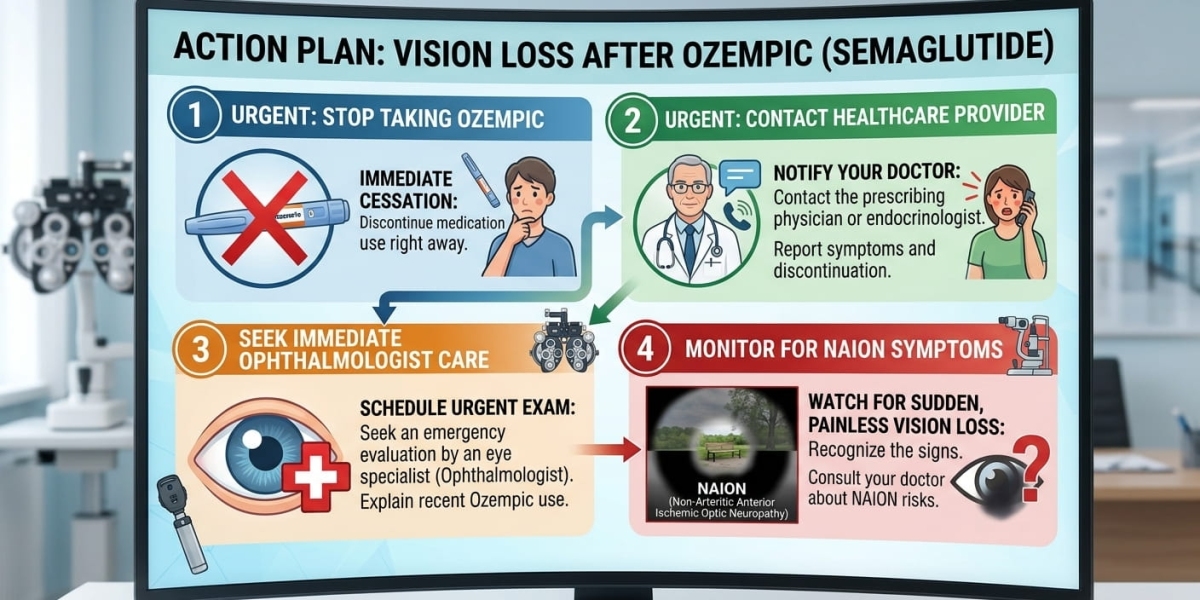
1. Seek Prompt Medical Attention
If you suddenly lose vision in one or both eyes, do not wait to see whether the problem goes away on its own.
Sudden vision loss can have several causes, including NAION, retinal problems, retinal vascular occlusion, optic nerve disorders, or neurological conditions. Some causes require urgent treatment.
An ophthalmologist, neuro-ophthalmologist, emergency physician, or other qualified medical professional can evaluate your symptoms and determine what may be happening.
If your vision loss is sudden, severe, or accompanied by other concerning symptoms, seek emergency medical care.
2. Ask Whether NAION Could Be Involved
If you are taking Ozempic and develop sudden, painless vision loss, your healthcare provider may consider nonarteritic anterior ischemic optic neuropathy (NAION) among the possible diagnoses.
NAION involves reduced blood flow to part of the optic nerve. Potential symptoms can include:
Sudden vision loss in one eye
Blurred or reduced vision
A dark or missing area in the visual field
Difficulty seeing details
Changes in color perception
Vision loss noticed after waking
These symptoms are not specific to NAION, so an eye examination is necessary to determine the actual cause.
3. Tell Your Doctor About Your Ozempic Use
Make sure your healthcare provider knows that you are taking Ozempic.
Provide information about:
When you started Ozempic
Your current dosage
Any previous doses
How long you have been taking it
When your vision symptoms began
Whether the symptoms affected one or both eyes
Other medications you take
Existing health conditions
The timing between medication exposure and vision symptoms can be important when doctors investigate a possible medication-related injury.
Do not stop or change a prescribed medication on your own. Discuss medication decisions with the healthcare professional managing your treatment.
4. Get a Clear Diagnosis
A proper diagnosis can help distinguish NAION from other causes of vision loss.
Depending on your symptoms, an eye specialist may perform:
Visual acuity testing
Visual field testing
Dilated eye examination
Optic nerve examination
Optical coherence tomography (OCT)
Retinal imaging
Additional laboratory or imaging tests when appropriate
Your medical records can provide important information about the nature and extent of the injury.
5. Document When Your Vision Loss Started
Write down exactly when you first noticed your vision problem.
For example, record:
Date: When did the symptoms begin?
Time: Did you notice the problem after waking or during another activity?
Eye affected: Was it your right eye, left eye, or both?
Symptoms: Was your vision blurry, dark, distorted, or partially missing?
Medication: How long had you been taking Ozempic?
A detailed timeline can help your doctor evaluate possible causes and may also be useful if you later consult a pharmaceutical injury attorney.
6. Preserve Your Medical and Prescription Records
If your vision loss becomes a significant medical issue, keep copies of relevant records.
Important documents may include:
Ozempic prescriptions
Pharmacy records
Medication history
Ophthalmology records
Eye examination results
OCT or other imaging reports
NAION diagnosis
Hospital records
Medical bills
Treatment receipts
Employment records related to lost work
Do not rely solely on memory. Written documentation can make it easier to establish the timeline of your medication use and vision injury.
7. Track How Vision Loss Affects Your Daily Life
Vision loss can affect much more than eyesight.
Depending on its severity, it may interfere with:
Driving
Reading
Working
Using computers
Recognizing faces
Shopping
Household activities
Mobility
Personal independence
It may also affect your income or ability to perform the same job.
If these changes occur, document them. A record of how the injury affects your everyday activities can help demonstrate the broader impact of serious vision impairment.
8. Consider Speaking With a Pharmaceutical Injury Lawyer
If you have been diagnosed with NAION or another serious vision condition after using Ozempic, you may want to discuss your situation with a lawyer experienced in pharmaceutical injury litigation.
A lawyer may review:
Your Ozempic treatment history
Timing of your vision loss
Medical diagnosis
Ophthalmology records
Other potential causes of the injury
Medical expenses
Lost income
Reduced earning capacity
Pain and suffering
Loss of quality of life
Vision Loss Lawyer focuses on inquiries involving serious vision problems allegedly associated with medications and pharmaceutical injury claims. The website discusses potential damages that may include medical expenses, ongoing treatment costs, lost income, diminished earning capacity, pain and suffering, and loss of quality of life.
Can You File an Ozempic Vision Loss Lawsuit?
A diagnosis of vision loss or NAION after taking Ozempic does not automatically mean that you have a successful legal claim.
A potential Ozempic vision loss lawsuit depends on the facts and evidence surrounding your individual circumstances. An attorney may need to evaluate the medication history, diagnosis, timing, medical records, and resulting damages.
The developing research concerning semaglutide and NAION may be relevant to these cases, but scientific association and legal causation are not the same thing. The 2025 multicenter study specifically concluded that additional research was needed to establish causality.
What Compensation May Be Available?
Depending on the facts of a potential pharmaceutical injury claim, damages may include:
Past and future medical expenses
Vision-related treatment costs
Lost wages
Reduced earning capacity
Pain and suffering
Loss of quality of life
Other documented financial losses
The exact damages available depend on the applicable law and the circumstances of the individual claim.
Final Thoughts
If you experience vision loss after Ozempic, the most important step is prompt medical evaluation. Do not assume that the medication caused your symptoms, but make sure your healthcare provider knows about your Ozempic use and when the vision changes began.
Research has identified a potential association between semaglutide and NAION, but the scientific evidence continues to develop and does not establish that Ozempic directly causes NAION in every patient.
If you receive a diagnosis of NAION or another serious vision injury and believe Ozempic may have contributed, preserve your medical records and medication history. You can then discuss your circumstances with a qualified pharmaceutical injury attorney to understand whether you may have legal options.
FAQs
1. What should I do if I suddenly lose vision after taking Ozempic?
Seek prompt medical attention. Sudden vision loss can have multiple causes and may require urgent evaluation. Tell the healthcare provider that you are taking Ozempic and explain when your symptoms began.
2. Can Ozempic cause NAION?
Research has identified a potential association between semaglutide, the active ingredient in Ozempic, and NAION. However, current research has not conclusively established that semaglutide causes NAION.
3. What are the symptoms of NAION?
NAION may cause sudden, usually painless vision loss, often in one eye. Some people experience blurred vision, missing areas in their visual field, or difficulty seeing details.
4. Should I stop taking Ozempic if I experience vision loss?
Do not make changes to prescribed medication without speaking with your healthcare provider. Seek prompt medical evaluation for sudden vision loss and discuss your medication with the clinician managing your treatment.
5. Can I file an Ozempic vision loss lawsuit?
Potentially, depending on your individual circumstances and available evidence. A pharmaceutical injury attorney can review your medication history, diagnosis, timing of the injury, medical records, and resulting damages to determine whether you may have a potential claim.